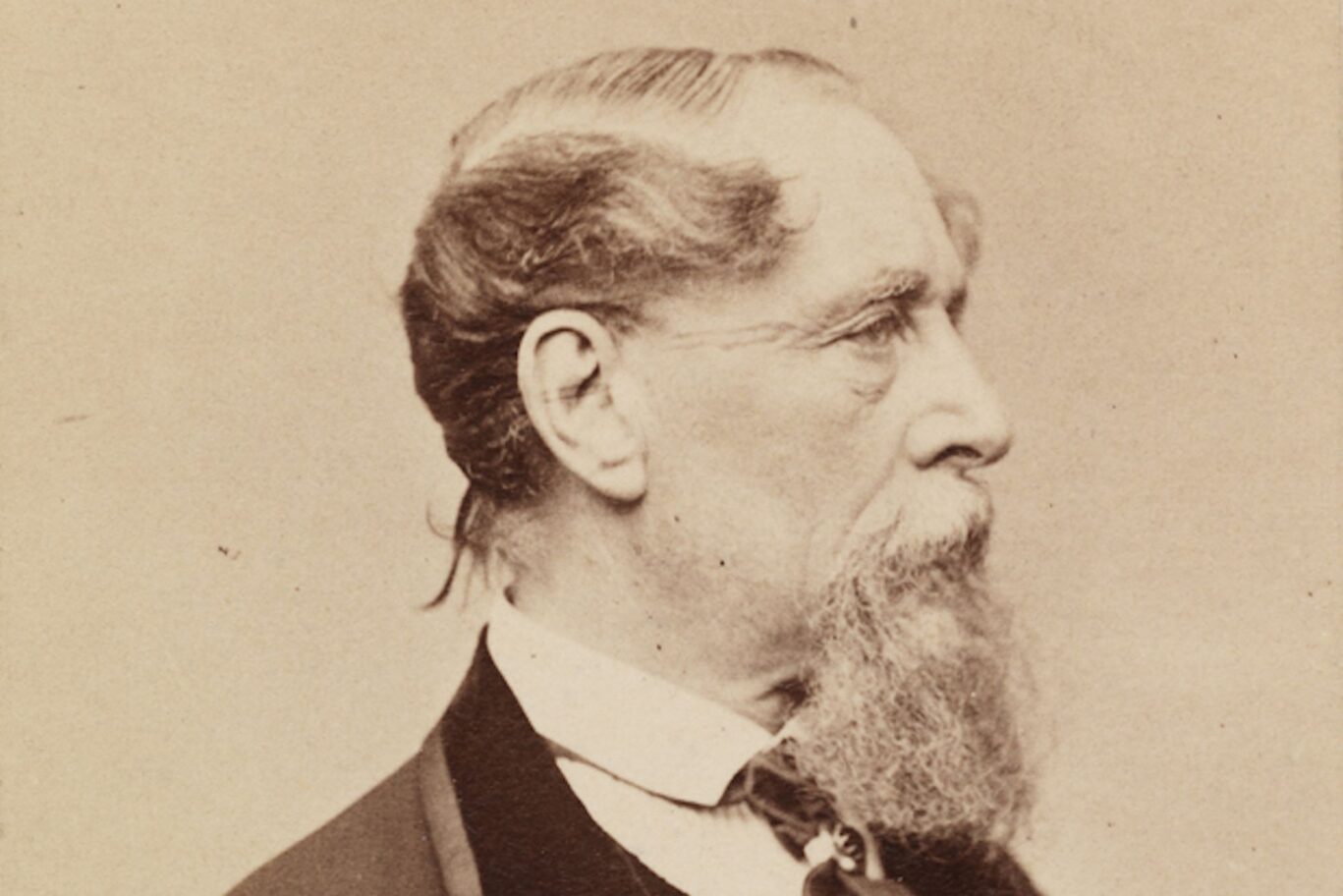
Charles Dickens and The Angel: A Story Almost 200 Years in the Making
There are hotels that have witnessed history, and there are those that have found their way into it.
At The Angel, our connection with Charles Dickens stretches back almost two centuries. He slept beneath our roof, wrote about The Angel in one of his best-known works and returned to Bury St Edmunds at the height of his fame to perform to audiences just a few steps from our front door.
More recently, that story came full circle when Angel Hill was transformed into Victorian England once again for a new adaptation of one of Dickens’s most celebrated novels.
Dickens arrives at The Angel
Charles Dickens first stayed at The Angel in 1835, long before he had become one of the most famous writers in the English language.
At the time, the young Dickens was working as a journalist for the Morning Chronicle. His work took him around the country reporting on political events, and it was during this period that he first came to Bury St Edmunds and stayed at The Angel.
He clearly remembered both.
Soon afterwards, Bury St Edmunds and The Angel found their way into The Pickwick Papers, Dickens’s first novel, originally published in serial form from 1836.
In Chapter 16, Mr Pickwick and his loyal servant Sam Weller arrive in Bury St Edmunds in pursuit of the troublesome Alfred Jingle.
Dickens introduces the town with a description that is still wonderfully recognisable today:
“The coach rattled through the well-paved streets of a handsome little town, of thriving and cleanly appearance…”
The coach comes to a halt outside a large inn in a wide open street, almost opposite the old abbey.
Then comes the line we particularly like:
“And this,” said Mr. Pickwick, looking up, “is the Angel! We alight here, Sam.”
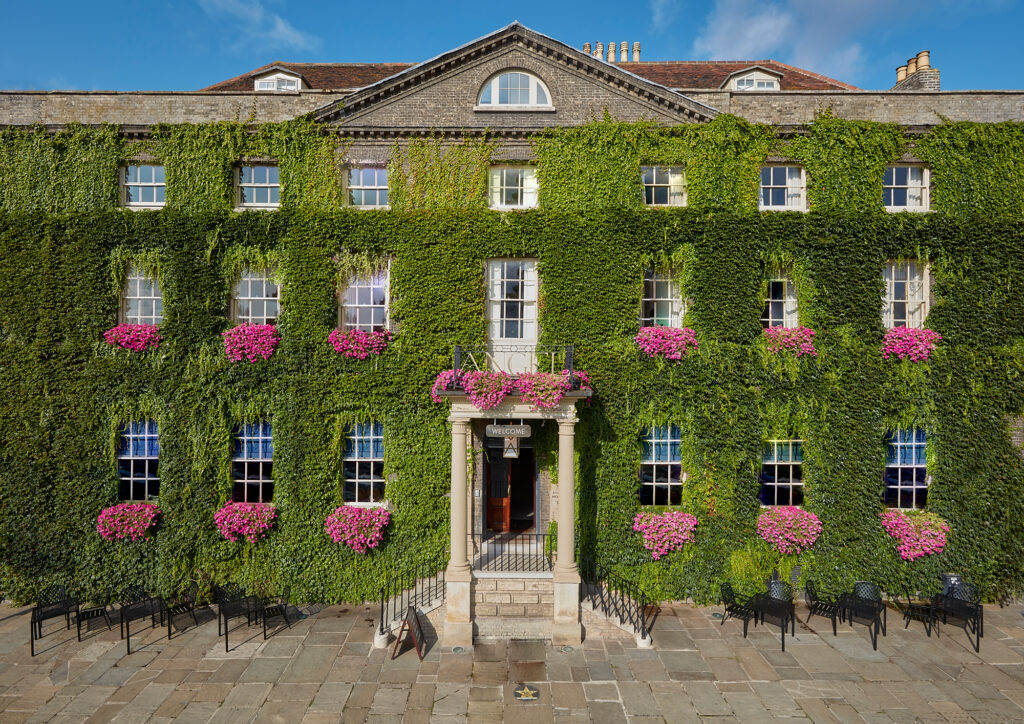
Nearly two centuries later, stand outside The Angel and the scene Dickens describes isn’t difficult to imagine: Angel Hill stretching out in front, the Abbey Gate opposite and The Angel standing exactly where his fictional travellers found it.
A famous author returns
By the time Dickens returned to Bury St Edmunds in 1859, his life looked rather different.
The young newspaper reporter who had first arrived at The Angel was now one of Britain’s most celebrated authors.
Dickens had also become famous for his public readings. These were far more than simple recitals; Dickens was a natural performer who brought his characters vividly to life in front of packed audiences.
On 13 October 1859, he gave a reading from The Pickwick Papers at The Athenaeum, immediately beside The Angel on Angel Hill.
He returned again in 1861, staying at The Angel while performing at The Athenaeum on 30 October, this time reading from The Personal History of David Copperfield.
His reaction afterwards tells us rather wonderfully what he thought of his Bury audience:
“Last night I read Copperfield at Bury St Edmunds to a very fine audience.”
He went on to say that he didn’t think a word — or even an idea — had been lost on them.
Bury St Edmunds appears again in David Copperfield
Bury clearly remained somewhere in Dickens’s imagination.
It isn’t only The Pickwick Papers that connects his writing with the town. Bury St Edmunds is also mentioned in David Copperfield.
Towards the end of the novel, David meets Mr Chillip and asks where he now lives.
Chillip replies:
“I am established within a few miles of Bury St. Edmund’s, sir.”
A small reference, perhaps, but another permanent link between Dickens and the town he visited several times during his life.
Dickens returns to Angel Hill – on the big screen
More than 150 years after Dickens’s visits, something rather special happened outside The Angel.
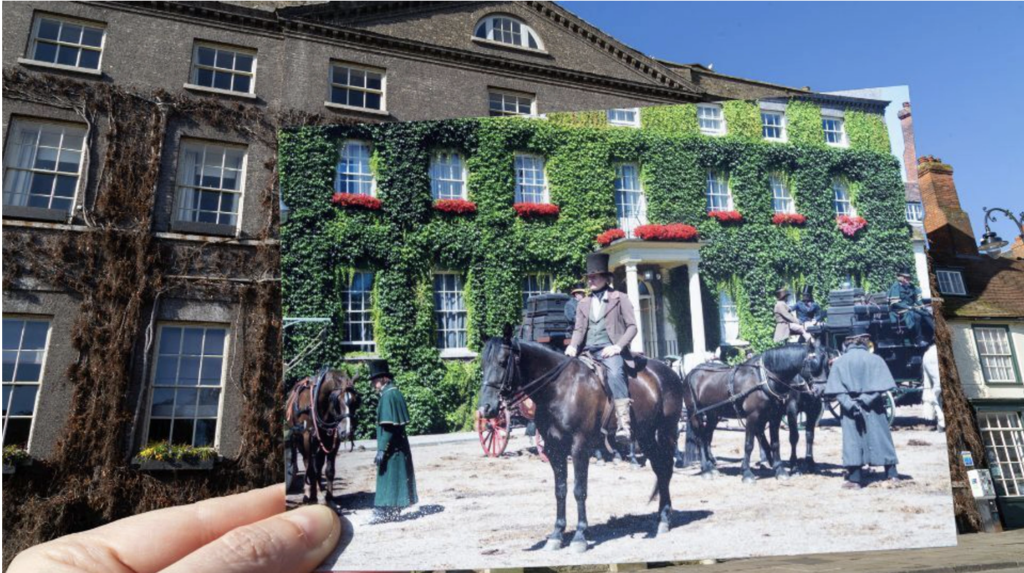
In July 2018, Bury St Edmunds became a film set for director Armando Iannucci’s The Personal History of David Copperfield, starring Dev Patel as David Copperfield alongside a cast including Tilda Swinton, Hugh Laurie and Peter Capaldi.
Angel Hill was transformed.
Cars and modern street furniture disappeared. Horses, carts and carriages took their place. Hundreds of extras, crew and cameras filled the streets as the historic centre of Bury was taken back to the nineteenth century.
Even The Angel’s Charles Dickens blue plaque had to be temporarily removed to make the scene historically accurate.
Filming took place directly outside The Angel, as well as around The Athenaeum, Crown Street, Chequer Square and Bury St Edmunds’ Theatre Royal. The Angel itself appeared in the film, its distinctive ivy-covered exterior providing a remarkably appropriate backdrop to Dickens’s world.
There is a particularly lovely symmetry to it all.
The real Charles Dickens came to Bury St Edmunds, stayed at The Angel and later placed the hotel and town into his fiction. More than a century and a half later, filmmakers returned to those same streets to bring his fiction back to life.
Follow in Dickens’s footsteps at The Angel
Today, we are rather proud to keep that connection alive.
Look outside The Angel and you’ll find the blue plaque commemorating Dickens’s visits, installed in 2012 to mark the 200th anniversary of his birth.
Inside, you’ll find further nods to our most famous literary guest, including artwork, quotations and a cheque signed by Charles Dickens himself, dated 1869.
And then there is Room 215.
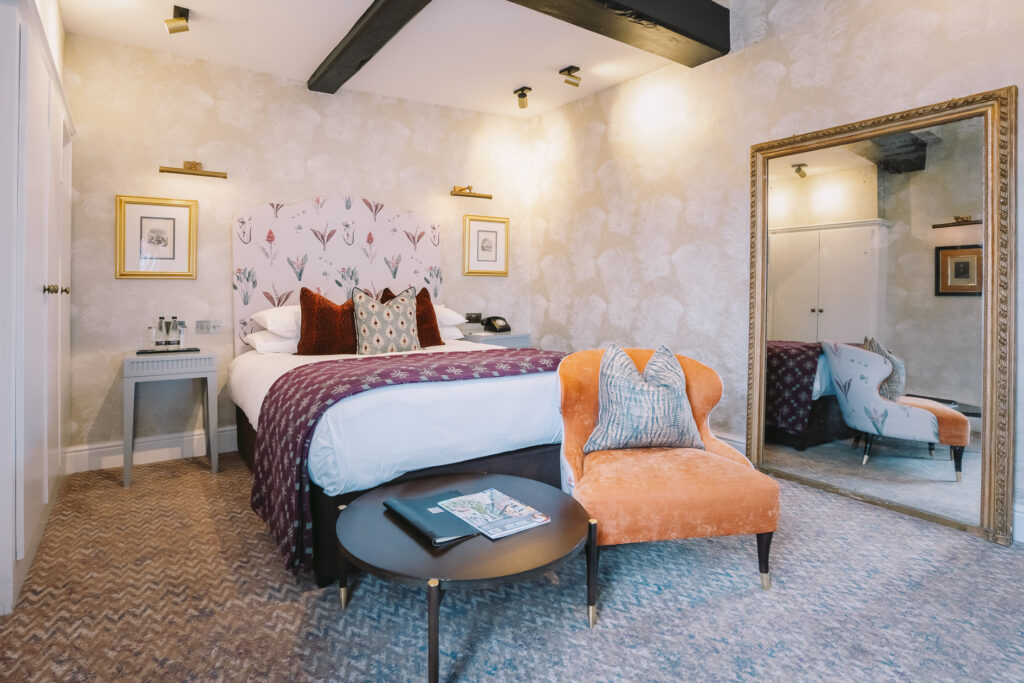
Now known as The Charles Dickens Suite, this is the room associated with Dickens’s later stays at The Angel. Today it has been beautifully refurbished, which means this particular piece of history isn’t behind glass or roped off in a museum.
You can actually stay here.
Almost two centuries after Dickens first arrived in Bury St Edmunds, guests can still spend the night at The Angel, step outside onto Angel Hill and look across towards the Abbey just as generations of travellers have done before them.
“We alight here, Sam.”
Charles Dickens’s relationship with The Angel is more than a famous name on a guest list.
It’s woven into the history of the building and the town around us: from a young journalist arriving in 1835, to Mr Pickwick pulling up outside The Angel; from packed Victorian readings at The Athenaeum to Dev Patel and a Hollywood film crew filling Angel Hill more than 150 years later.
And perhaps the nicest part of the story is that you can still experience it.
The Angel is still here. The Abbey still stands opposite. The Athenaeum is still next door.
And Room 215 is ready for its next guest.